


If you manage multiple subdomains like blog.yourdomain.com and shop.yourdomain.com, buying separate certificates for each is a waste of time and money. A wildcard SSL certificate lets you secure them all with a single product. This one simple change can save you hundreds of dollars and hours of administrative hassle every year.
But there’s a catch: a wildcard only covers one level of subdomains. That means dev.staging.yourdomain.com won’t be protected. Knowing this limit upfront helps you plan your domain structure and avoid expensive mistakes down the road.
What Is a Wildcard SSL Certificate and How Does It Work?
A wildcard SSL certificate uses an asterisk in the domain name, like *.yourdomain.com, to encrypt unlimited first-level subdomains. This includes addresses such as mail.yourdomain.com, store.yourdomain.com, or app.yourdomain.com. The certificate verifies your ownership of the main domain and then automatically secures any subdomain that matches the pattern.
Providers like Namecheap, Sectigo, and DigiCert offer DV wildcard certificates starting around $35–$40 per year. For organizations that need higher trust, OV wildcard certificates are available at a premium. However, Extended Validation (EV) wildcard certificates do not exist, so don’t waste time looking for one.
A critical security point: all subdomains share the same private key. If that key is compromised, every subdomain is exposed. That’s why you must store the key safely and rotate it regularly. Also remember that a wildcard won’t cover second-level subdomains like dev.staging.yourdomain.com; for those, you need a separate certificate or a SAN certificate.
Securing Your Digital Frontier: The Power of Wildcard SSL Certificates
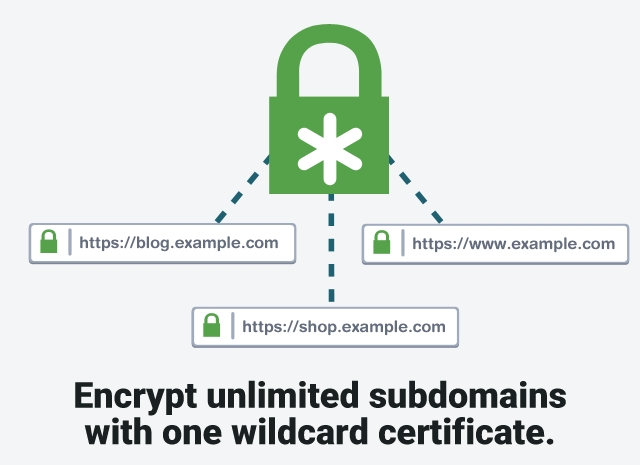
In 2026, Wildcard SSL certificates remain a cornerstone for robust online security, especially for businesses managing numerous subdomains. They offer a streamlined way to protect multiple related websites, like your blog, shop, or API, all under one primary domain. This simplifies management and can significantly cut costs compared to purchasing individual certificates for each subdomain.
The magic lies in the asterisk (*), which acts as a placeholder for any first-level subdomain. For example, a certificate for *.yourdomain.com automatically covers blog.yourdomain.com, shop.yourdomain.com, and api.yourdomain.com. This makes managing your security footprint much easier, a crucial factor for growing online operations.
| Feature | Description | Cost (Est. Annual) |
| Wildcard SSL | Secures unlimited first-level subdomains with one certificate. | $35 – $40+ (DV) |
| Validation Levels | Domain Validation (DV) for basic security; Organization Validation (OV) for enhanced trust. | DV: Lower cost; OV: Higher cost |
| Limitations | Only covers one level of subdomains (e.g., *.yourdomain.com does not cover sub.sub.yourdomain.com). EV Wildcards are not available. | Requires careful planning for deep subdomains. |
Wildcard TLS Certificate: How It Works
A Wildcard TLS certificate functions by using an asterisk (*) in the domain name field of the certificate’s Common Name (CN). This asterisk acts as a wildcard character, meaning the certificate is valid for the main domain and all its direct subdomains. For instance, a certificate issued for ‘*.yourdomain.com’ will secure ‘mail.yourdomain.com’, ‘ftp.yourdomain.com’, and any other subdomain directly under ‘yourdomain.com’.
Read also: Stop Buying Multiple SSLs: One Wildcard SSL Covers All Subdomains
This single certificate encrypts traffic for all these associated sites, ensuring data is protected during transmission. It’s a powerful tool for organizations that use a consistent naming convention for their subdomains, simplifying the often complex task of managing digital certificates across an entire network.
Asterisk SSL Certificate: The Basics
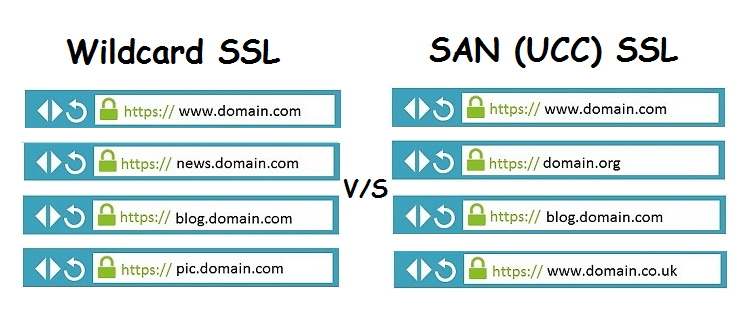
The term ‘Asterisk SSL certificate’ is simply another name for a Wildcard SSL certificate, highlighting the key feature: the asterisk (*). This symbol is what allows the certificate to cover multiple subdomains. It’s a common shorthand used in the industry to refer to this specific type of certificate.
Understanding this basic function is key. When you see or hear ‘Asterisk SSL certificate’, know that it refers to a single certificate capable of protecting an unlimited number of first-level subdomains. This is a significant advantage for managing security across a diverse digital presence.
Subdomain SSL Certificate for Unlimited Subdomains
When you need to secure many subdomains, a Wildcard SSL certificate is often the most practical solution. It provides a way to cover an unlimited number of first-level subdomains under a single domain name. This is incredibly useful for businesses that operate multiple services or content sites, each on its own subdomain.
Read also: Fix Exchange Errors: Get a Comodo UCC SSL for $45
Think of it as a master key for your subdomains. Instead of getting a separate key (certificate) for each door (subdomain), you get one master key that opens all the doors at the first level. This is why it’s often referred to as an unlimited subdomain SSL solution for that specific domain level.
Multi-subdomain SSL vs Wildcard Certificate
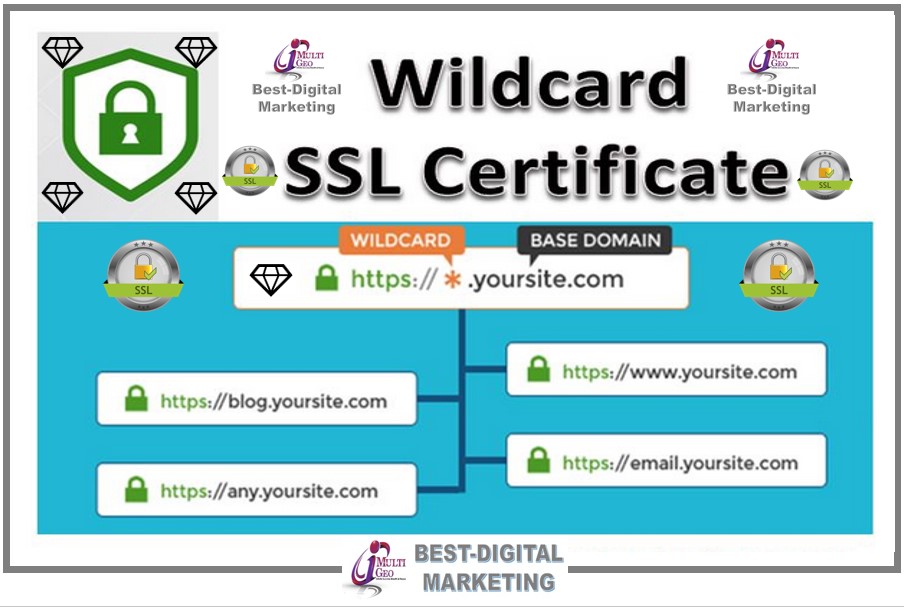
While both address securing multiple online presences, there’s a key difference. A Wildcard certificate is designed specifically for subdomains of a single domain (e.g., *.yourdomain.com). It’s efficient for protecting many related sites like blog.yourdomain.com and shop.yourdomain.com.
A Multi-Domain (SAN) certificate, on the other hand, is more flexible. It can secure a mix of different domain names and subdomains all within one certificate. For example, you could secure yourdomain.com, anotherdomain.com, and blog.yourdomain.com with a single SAN certificate. The choice depends on whether your needs are focused on one domain’s subdomains or a broader range of distinct online properties.
DV Wildcard SSL: Quick and Affordable
For many small to medium-sized businesses, the Domain Validation (DV) Wildcard SSL certificate offers a perfect balance of security and cost. The validation process is straightforward, typically involving an automated check to confirm you control the domain. This means you can get your certificate issued quickly, often within minutes.
Priced competitively, often starting around $35-$40 annually from providers like Namecheap or GoDaddy, DV Wildcard SSL is an accessible way to secure multiple subdomains. It provides essential encryption, making it a solid choice for general website protection and e-commerce transactions where immediate setup and budget are key considerations.
OV Wildcard SSL: Higher Validation
If your organization requires a greater level of trust and validation, an Organization Validation (OV) Wildcard SSL certificate is the next step. This type of certificate undergoes a more rigorous vetting process. It verifies not only domain ownership but also the legal existence and identity of your organization.
While OV certificates are more expensive than DV options, they provide a higher assurance to your website visitors. This is particularly important for businesses handling sensitive data or those that want to project a stronger image of legitimacy and security. Sectigo and DigiCert are well-known providers offering these more robust solutions.
Wildcard Certificate vs SAN Certificate: Key Differences
The primary distinction lies in scope. A Wildcard certificate is specialized for securing all first-level subdomains of a single domain (e.g., *.yourdomain.com). It’s about depth within one domain structure.
A SAN (Subject Alternative Name) certificate offers breadth. It allows you to list and secure multiple, distinct domain names and subdomains under one certificate. This means you could secure yourdomain.com, www.yourdomain.com, and even completely different sites like another-site.com all on the same certificate. They serve different, though sometimes overlapping, needs.
Securing Multiple Subdomains with One Wildcard SSL
Implementing a Wildcard SSL certificate is a strategic move for efficiency. By using a single certificate for *.yourdomain.com, you cover all your first-level subdomains without the hassle of managing individual certificates for each. This simplifies renewals, installations, and overall security management.
However, it’s crucial to remember the limitation: it only covers one level. If you have subdomains like dev.staging.yourdomain.com, a certificate for *.yourdomain.com will not protect them. For such nested structures, you would need a separate certificate or a different strategy, highlighting the need for careful planning in your subdomain architecture.
A common pitfall is assuming a Wildcard SSL covers all levels of subdomains. It does not. Always verify the scope for deeply nested structures.
The process of generating the Certificate Signing Request (CSR) for a wildcard is standard, but you must ensure the asterisk is correctly placed in the Common Name field. Many providers, including GlobalSign, offer tools and support to help with this process. Automated renewal and deployment via APIs are also becoming vital for managing these certificates effectively in dynamic environments.
The Future of Wildcard SSL in 2026: Continued Relevance and Evolution
In 2026, Wildcard SSL certificates remain an indispensable tool for many organizations. Their ability to simplify the management of multiple subdomains offers significant cost and operational benefits. As businesses continue to expand their online presence with various services and platforms hosted on subdomains, the demand for efficient security solutions like Wildcard SSL will persist.
While the core functionality is well-established, the surrounding technology is evolving. We are seeing increased integration with automated certificate management platforms. This allows for smoother renewals and deployments, crucial for dynamic cloud environments. For deeply nested subdomains, SAN certificates will continue to be the go-to, but for straightforward, single-level subdomain structures, the Wildcard SSL certificate is set to maintain its strong position as a practical and cost-effective security standard.
Read also: Cheap Comodo SSL for $3.75 a Year – Here’s How
Your Quick Action Plan for Wildcard SSL
Step 1: Audit Your Subdomain Structure
List every subdomain you currently use or plan to use. Verify they are all one level deep, like shop.yourdomain.com. This ensures a single wildcard certificate will cover them all.
Step 2: Choose Your Validation Level
For most websites, Domain Validation (DV) is sufficient and costs around $35-$40 per year. If you need higher trust, Organization Validation (OV) is available but costs more.
Step 3: Secure Your Private Key
Since the same private key protects all subdomains, store it in a hardware security module (HSM) or use a secure key management service. Never share it via email or unencrypted channels.
Frequently Asked Questions
Can a wildcard SSL certificate secure sub-subdomains?
No. A wildcard for *.yourdomain.com only covers one level, like blog.yourdomain.com. It will not secure dev.staging.yourdomain.com. You would need a separate certificate for that.
Is a wildcard SSL more expensive than a standard SSL?
Typically yes, but the cost is often lower than buying individual certificates for each subdomain. Basic DV wildcards start around $35 per year, while a single-domain certificate may cost $10.
Can I get an Extended Validation (EV) wildcard certificate?
No. Industry standards do not allow EV validation for wildcard certificates due to the shared private key risk. The highest validation available for wildcards is Organization Validation (OV).
Choosing a wildcard SSL certificate is a smart move for any business managing multiple subdomains under one roof. It simplifies renewal, saves money, and maintains strong encryption across your entire online presence.
Now review your current subdomain list and compare prices from trusted providers like DigiCert or Namecheap. Your next step is to generate a CSR with the correct wildcard format and order your certificate.
Imagine a future where your entire domain ecosystem is secured with a single click, no manual renewals for each subdomain. That efficiency is the new standard for modern web management.
