

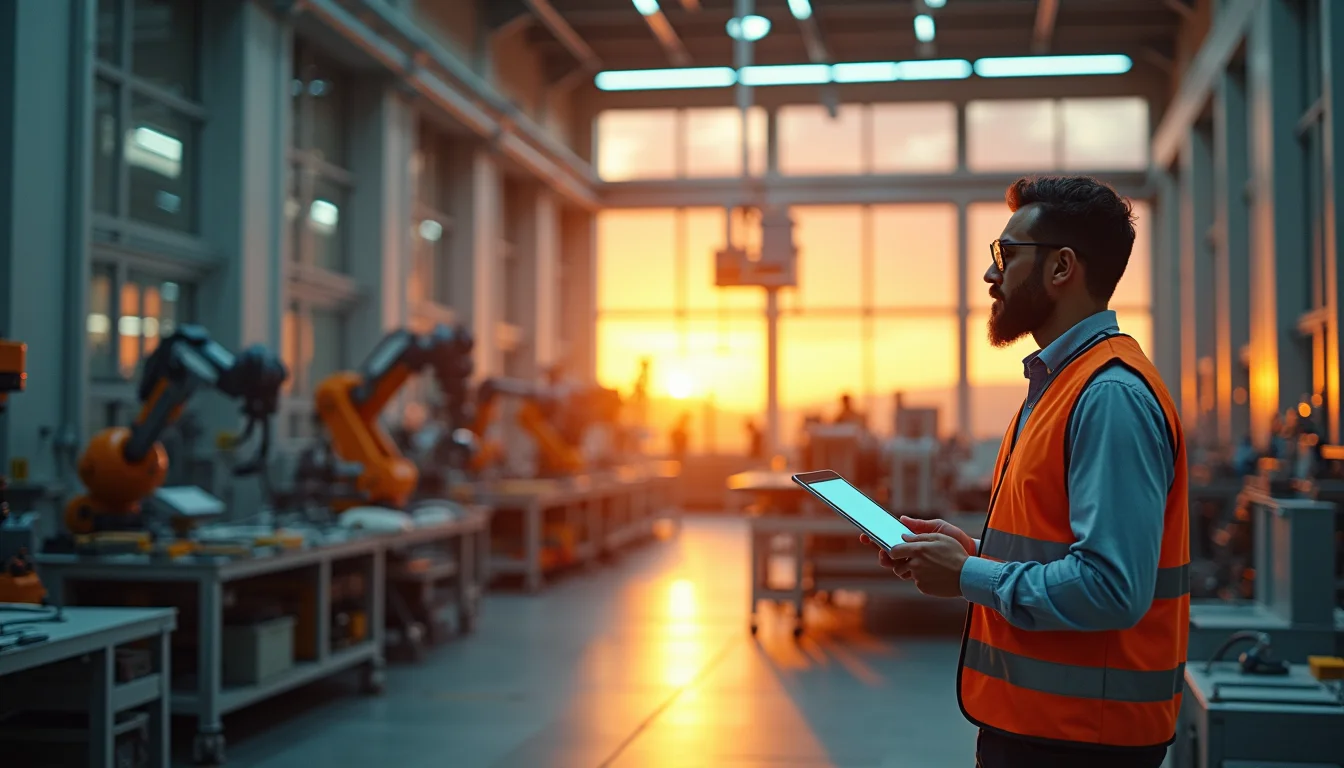
Your 2D paper sketches are slowing you down. Every hour you wait on a messy blueprint means a competitor is already shipping their product. SolidWorks modeling services turn your rough ideas into precise, editable 3D models that engineers and factories actually love to use.
Stop paying for revisions caused by vague drawings. Professional CAD outsourcing gives you a parametric file you can tweak endlessly, plus manufacturing drawings ready for the shop floor. This is how you get from concept to production without the headache.
What You Get with Professional SolidWorks Design Services
A good SolidWorks designer doesn’t just make pretty pictures. They build parametric models that let you change a dimension and have the whole assembly update automatically. This flexibility saves you days of rework when your client changes their mind.
Many firms also offer FEA analysis services to test stress and heat before you cut metal. For consumer products, photorealistic rendering services create marketing images that look like real photos. And if you have an old part with no CAD file, reverse engineering CAD can scan it and turn it into a perfect digital copy.
SolidWorks Modeling Services: Powering Innovation in 2026
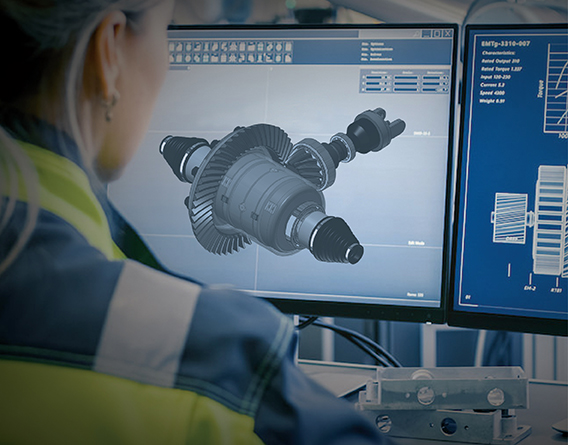
In 2026, SolidWorks modeling services are indispensable tools for bringing new products and engineering designs to life. These services are crucial for mechanical engineering and manufacturing, offering detailed 3D part and assembly creation. They use parametric modeling, which means designs can be easily changed later on.
These experts transform old 2D drawings into modern 3D models, essential for today’s design and analysis processes. They also create precise manufacturing drawings with all the necessary details for production. Advanced services like simulations help test product performance before manufacturing, saving time and money.
| Service | Description | Typical Use Case |
|---|---|---|
| 3D Part & Assembly Design | Creating detailed models of individual components and how they fit together. | New product development, machinery design. |
| 2D to 3D CAD Conversion | Converting legacy blueprints and sketches into editable 3D models. | Updating old designs for modern workflows. |
| Manufacturing Drawings | Generating precise technical drawings with GD&T for production. | Ensuring parts can be manufactured correctly. |
| Simulation (FEA/CFD) | Analyzing product performance under stress, heat, or fluid flow. | Validating design integrity and efficiency. |
| Reverse Engineering | Digitally reconstructing existing physical parts. | Recreating obsolete parts or improving existing designs. |
| Rendering | Creating realistic images of designs for marketing. | Product visualization, sales presentations. |
SolidWorks Design Services for Product Development
Launching a new product requires meticulous design, and SolidWorks design services are at the forefront of this process. They help turn initial concepts into fully realized 3D models, ready for prototyping and testing. This ensures that every aspect of the product, from its form to its function, is precisely defined before costly manufacturing begins.
The ability to iterate quickly on designs is a major advantage. With parametric modeling, engineers can make changes to one part, and the software automatically updates related components. This flexibility is key to refining a product and meeting market demands efficiently.
Parametric 3D Modeling for Engineering Projects
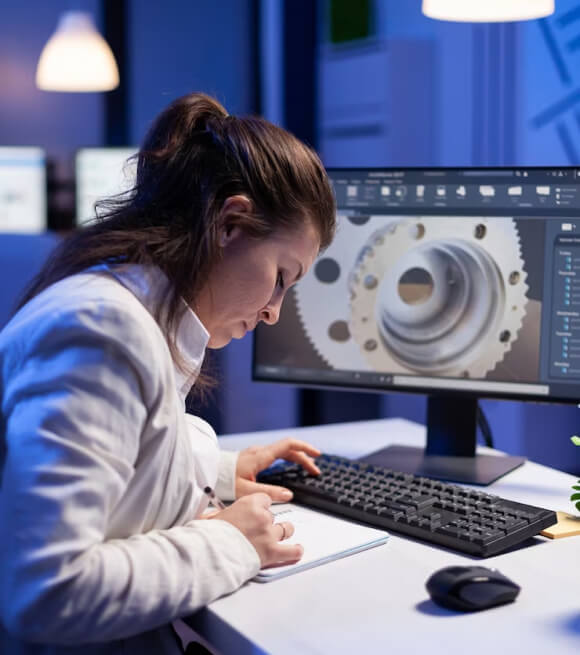
Parametric modeling is the backbone of modern SolidWorks design services. It allows designers to define relationships between different parts of a model. Changing one dimension or feature can intelligently update the entire design, making modifications straightforward and reducing errors.
This approach is vital for complex mechanical design engineering, where components must interact precisely. It ensures that a design remains robust and functional even after multiple revisions.
For any engineering project, especially those involving intricate assemblies, parametric modeling ensures that the final design is not only accurate but also adaptable. This is crucial for future updates or variations of the product.
Manufacturing Drawing Services for Production
Once a 3D model is finalized, clear manufacturing drawings are essential for production. SolidWorks manufacturing drawing services provide detailed technical documentation that guides the fabrication process. These drawings include precise dimensions, tolerances, and critical annotations like Geometric Dimensioning and Tolerancing (GD&T).
Accurate manufacturing drawings are non-negotiable for ensuring that parts are produced to specification. They bridge the gap between design and the shop floor, preventing costly mistakes and ensuring product quality. This is a core part of CAD drafting services.
FEA Analysis Services for Structural Validation
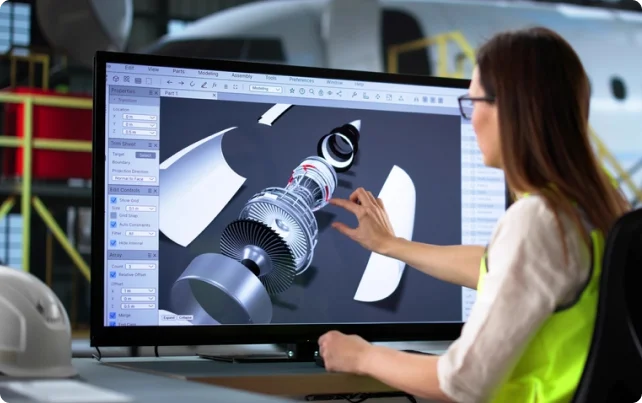
Before a product goes into mass production, its structural integrity must be confirmed. FEA analysis services, using SolidWorks Simulation, subject 3D models to virtual stress tests. This helps predict how a part will behave under real-world loads and conditions.
By identifying potential weak points early, engineers can make necessary design adjustments. This prevents failures in the field and significantly reduces the need for expensive physical prototypes and testing. It’s a crucial step in product design outsourcing.
Reverse Engineering CAD from Physical Parts
Sometimes, you need to recreate or improve an existing part for which no original design files exist. Reverse engineering CAD services use various methods, including 3D scanning, to capture the geometry of a physical object. This data is then converted into an editable 3D CAD model.
This process is invaluable for maintaining older machinery, creating replacement parts, or analyzing competitor products. It allows for the digital reconstruction of physical objects, making them usable in modern design workflows.
Sheet Metal Design with SolidWorks
Designing products made from sheet metal requires specialized knowledge and tools. SolidWorks offers robust capabilities for sheet metal design, allowing for the creation of complex folded parts, including flanges, bends, and cutouts. The software can automatically generate flat patterns, which are essential for manufacturing.
Expert SolidWorks designers can optimize sheet metal parts for manufacturability, considering material thickness, bend radii, and tooling. This ensures that the parts can be efficiently produced without defects.
Photorealistic Rendering for Client Presentations
Visualizing a product before it’s physically built is powerful for sales and marketing. Photorealistic rendering services create high-quality, lifelike images and animations of SolidWorks models. These visuals can be used in presentations, websites, and marketing materials.
These renderings help clients and stakeholders understand the final product’s appearance, texture, and lighting. This clear visualization aids in decision-making and builds excitement for the product.
2D to 3D CAD Conversion for Legacy Drawings
Many companies still rely on older 2D drawings. Converting these legacy documents into modern 3D CAD models is a critical service. This 2D to 3D CAD conversion unlocks the benefits of 3D modeling, such as easier modification, better visualization, and integration with simulation tools.
This process requires careful attention to detail to ensure accuracy. It breathes new life into old designs, making them compatible with current engineering and manufacturing standards. This is a key offering from many CAD outsourcing companies.
The Future of SolidWorks Modeling Services in 2026
SolidWorks modeling services will continue to be a driving force in product development and engineering through 2026 and beyond. The demand for skilled SolidWorks engineers and designers remains high across all industries. As technology advances, these services will become even more integrated into automated design and manufacturing workflows.
Expect to see greater use of simulation, advanced rendering, and seamless data transfer from design to production. For businesses looking to innovate and stay competitive, investing in expert SolidWorks modeling services is not just an option—it’s a necessity for success.
Your 3-Step Action Plan for SolidWorks Modeling Services
Step 1: Define Your Deliverables
Specify whether you need a fully parametric model, a static mesh, or a 2D drawing set. This avoids costly revisions and ensures the model suits your workflow.
Step 2: Request a Design for Manufacturing (DFM) Review
Ask your service provider to analyze the model for manufacturability before finalizing. This catches issues like thin walls or sharp corners that cause production delays.
Step 3: Validate with Simulation Early
Incorporate FEA or CFD analysis during the design phase to verify performance. This reduces physical prototyping costs and accelerates time to market.
Frequently Asked Questions
How do I ensure the SolidWorks model I receive is editable?
Request a ‘fully parametric’ model with feature tree intact, not a dumb solid. This allows you to modify dimensions and features later without rebuilding.
What is the typical cost for converting a 2D drawing to 3D?
Prices range from $50 to $500 per drawing depending on complexity and detail level. Simple parts cost less; assemblies with many components cost more.
Can I get a photorealistic rendering from my SolidWorks model?
Yes, most service providers offer rendering services using SolidWorks Visualize or similar tools. Expect to pay an additional $100–$500 per image for high-quality outputs.
Choosing a professional SolidWorks modeling service is a strategic investment in your product’s precision and speed to market. The right partner translates your concepts into manufacturable reality with technical rigor.
Now, review your project requirements and reach out to a service provider with a clear brief. Start with a small test model to evaluate their communication and quality before committing to larger work.
As 3D printing and smart manufacturing evolve, parametric models become the digital thread from idea to production. Your next product launch could be defined by the quality of your digital foundation.
