


Is your warehouse floor a maze of scattered pallets, wasting space and slowing down your team? You are losing money every day if you are not using vertical space. Industrial pallet racks are the solution, and they are more affordable than you think.
These steel systems let you stack inventory high and keep it organized for easy forklift access. Forget guessing about safety or capacity; we will cover the real standards and costs so you can make a smart investment.
Heavy-duty warehouse storage that maximizes every inch of vertical space
Industrial pallet racks are built from steel upright frames and horizontal load beams that lock together with a teardrop connection. This design allows quick, tool-free assembly and easy adjustments as your inventory changes. A standard starter unit uses two uprights and beams, while add-on units add one upright to extend the row.
For safety, every column must be bolted and anchored to the concrete floor per OSHA regulations. Most racks use 42-inch-deep uprights to fit standard 48-inch pallets, and wire mesh decking prevents items from falling. In 2026, high-visibility safety finishes like safety orange are common to reduce forklift accidents.
Unlocking Warehouse Efficiency: The Power of Industrial Pallet Racks
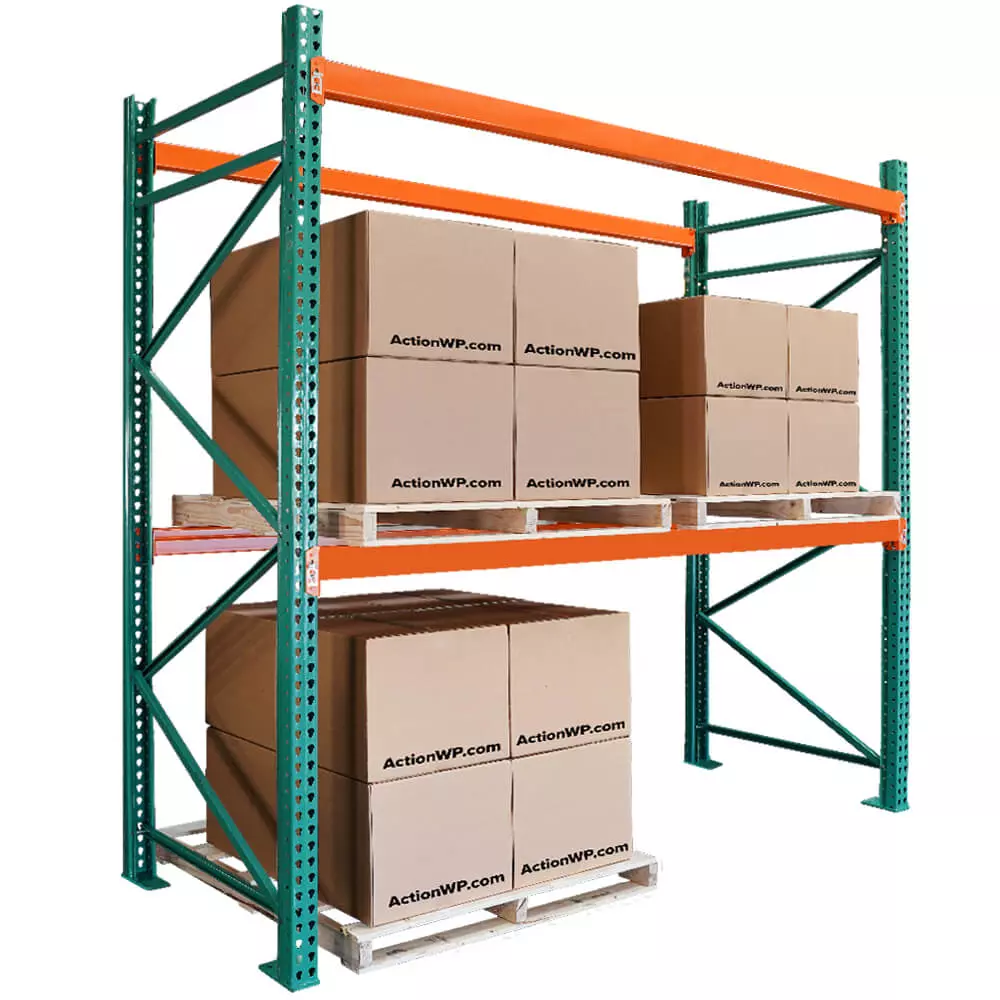
Industrial pallet racks are the backbone of efficient warehouse operations, transforming vertical space into highly accessible storage. These systems are engineered from robust, high-strength steel to handle significant weight and frequent use. They are the standard for managing palletized goods, allowing forklifts to quickly store and retrieve inventory.
The design focuses on maximizing storage density while ensuring safety and accessibility. Understanding the components and proper setup is key to leveraging their full potential. In 2026, these racks are more critical than ever for supply chain speed and accuracy.
| Component | Description | Standard US Size | Capacity Example |
|---|---|---|---|
| Uprights | Vertical frames supporting beams | 42 inches deep | Varies by model |
| Load Beams | Horizontal supports for pallets | Varies (e.g., 96, 108, 120 inches) | Up to 6,500 lbs per pair |
| Decking | Surface for loose items or added safety | Wire Mesh, Solid Steel | Distributes load |
| Connection | Method for attaching beams to uprights | Teardrop style common | Tool-free assembly |
Selective Pallet Racks for Easy Access
Selective pallet racks offer direct access to every pallet stored. This design is ideal for warehouses that need to retrieve specific items frequently. Unlike denser storage methods, each pallet is readily available without needing to move others. This direct access significantly speeds up order fulfillment and inventory management processes.
Read also: Heavy Duty Industrial Racking That Won’t Fail You or Your Budget
The ability to reach any pallet instantly is a major advantage for high-turnover goods.
Heavy-Duty Steel Upright Frames

The upright frame is the primary vertical support of any pallet rack system. Constructed from roll-formed or structural steel, these frames bear the entire load of the stored inventory. Their design, often featuring reinforcing columns and base plates, ensures stability and strength. Standard depths like 42 inches are chosen to accommodate common 48-inch deep pallets, providing adequate overhang for secure placement.
High-strength steel is essential for safety and longevity. The integrity of the uprights directly impacts the overall load capacity and safety of the entire rack structure. Regular inspection of these frames for damage is a critical maintenance task.
Horizontal Load Beams and Teardrop Connections
Horizontal load beams connect to the upright frames, creating the shelves where pallets rest. The ‘Teardrop’ connection style is widely popular because it allows for quick, tool-free assembly and adjustment. Beams simply lock into pre-punched holes on the uprights, making setup and reconfiguration much faster. This ease of assembly reduces labor costs during installation and any necessary layout changes.
Load beams must be rated for the specific weight they will carry. Always verify the capacity of the beams against the weight of your heaviest pallets. The secure locking mechanism of the teardrop design ensures that beams remain firmly in place, preventing accidental dislodging.
Read also: Stop Inventory Errors: The Best Warehouse Scanners for 2026
Roll-Formed Steel Racks for Durability

Most industrial pallet racks today utilize roll-formed steel. This manufacturing process creates strong, lightweight components that are cost-effective to produce. The cold-forming of steel results in a material with excellent tensile strength, making it ideal for the demands of a busy warehouse environment. Roll-formed racks offer a great balance of performance and affordability.
This method allows for precise shaping and consistent quality across all components. The resulting racks are resistant to bending and deformation under load. It’s a standard for reliable warehouse shelving systems.
Wire Mesh Decking for Safety
Wire mesh decking is a common addition to pallet rack systems, providing a secure surface for stored items. It prevents smaller items from falling through the load beams and can support loose inventory that doesn’t fit neatly on a standard pallet. This decking also improves visibility and allows for better air circulation within the rack system.
Safety is enhanced as it creates a more stable storage platform. It also helps in meeting fire code requirements in some facilities by allowing sprinkler systems to be more effective. Installation is typically simple, with the mesh resting on or attaching to the load beams.
OSHA Regulations for Pallet Rack Anchoring
OSHA regulations are very clear on the importance of securing pallet racks. All upright columns must be securely bolted and anchored to the concrete floor. This is not just a recommendation; it is a critical safety requirement to prevent the racks from tipping or collapsing. Proper anchoring ensures the structural integrity of the entire system, especially under seismic activity or impact from forklifts.
Anchoring prevents catastrophic failure. The RMI (Rack Manufacturers Institute) standards, which OSHA often references, provide detailed guidelines for proper installation and seismic bracing. Failing to anchor racks is a common and dangerous mistake, leading to serious accidents.
OSHA mandates that pallet rack columns must be anchored to the floor to prevent collapse.
Vertical Space Maximization with Add-On Units
Warehouse space is expensive, making vertical space maximization a top priority. Pallet rack systems excel at this by utilizing the full height of a building. Systems are built using ‘Starter Units’ and expanded with ‘Add-On Units’. An add-on unit consists of one upright frame and associated beams, allowing for continuous rows of racking to be created efficiently.
This modular approach lets businesses scale their storage capacity as needed. It’s an economical way to increase storage density without expanding the building footprint. This is key for efficient warehouse shelving systems.
Starter Units vs Add-On Units in Warehouse Layout
Understanding the difference between starter and add-on units is crucial for planning warehouse layouts. A starter unit, the beginning of a row, includes two upright frames and beams. Each subsequent add-on unit shares one upright frame with the unit before it, effectively creating a continuous row of racks. This design minimizes the number of uprights needed, saving costs and space.
Planning your layout with these units in mind allows for maximum storage efficiency. It ensures that you are not using more components than necessary. This strategic approach is fundamental to effective warehouse design.
The Future of Industrial Pallet Racks in 2026
In 2026, industrial pallet racks continue to be indispensable for efficient warehouse operations. We are seeing a greater emphasis on integrated safety features, such as high-visibility colors and improved connection security. The drive for greater storage density and faster retrieval times means that rack systems will continue to evolve, incorporating smarter designs and more durable materials.
Expect to see more automation integration with racking systems and a continued focus on RMI certification as a benchmark for quality. The demand for robust, reliable, and safe storage solutions will only grow. Investing in quality pallet racking is investing in the operational future of your business.
Read also: Used Warehouse Racking: Save Up to 80% on Storage
Your 3-Step Action Plan for Industrial Pallet Racks
Step 1: Assess Your Space and Load Needs
Measure your warehouse ceiling height and floor dimensions. Determine the total weight and size of your palletized goods.
Step 2: Choose the Right Components
Select upright frames with the correct depth (standard 42 inches for 48-inch pallets). Pick load beams that match your required shelf capacity, and opt for teardrop connections for easy assembly.
Step 3: Prioritize Safety and Compliance
Ensure all columns are bolted and anchored to the concrete floor per OSHA standards. Add wire mesh decking to prevent falls and consider high-visibility safety finishes for better awareness.
Frequently Asked Questions
What is the standard depth for an industrial pallet rack?
The standard depth is 42 inches, designed to accommodate 48-inch deep pallets. This allows for a 6-inch overhang for safe forklift access.
How do I know the load capacity of my rack?
Check the manufacturer’s label on the upright and beam. Always adhere to the rated capacity and never exceed it to prevent structural failure.
Do I need to anchor my pallet rack to the floor?
Yes, per OSHA and industry standards, all pallet rack columns must be securely bolted and anchored to the concrete floor. This prevents tipping and ensures stability during seismic events or forklift impacts.
Choosing the right industrial pallet rack is a critical investment in your warehouse efficiency and safety. By following the steps above, you ensure a system that meets your storage needs and complies with regulations.
Now, take the next step and consult with a certified rack supplier to get a quote tailored to your space. They can help you design a layout that maximizes vertical storage and optimizes workflow.
In 2026, advanced rack designs with high-visibility safety finishes and smart load monitoring are setting new benchmarks for warehouse operations. Embrace these innovations to future-proof your facility and maintain a competitive edge.
