


You’ve built something valuable, but now you’re stuck. You want to sell your Sacramento business, but you don’t know where to start. The process can feel overwhelming, and many owners waste months or lose thousands by making one simple mistake.
That mistake is trying to do it alone without a broker. In 2026, selling a small business in Sacramento takes 5 to 7 months on average, and the right broker can make all the difference. You need a clear, step-by-step plan to get top dollar without the stress.
Disclaimer: This article provides general information about selling a business and does not constitute legal or financial advice. Consult a qualified professional for your specific situation.
How to Sell Your Business in Sacramento in 2026: A Real-World Guide
Let’s get one thing straight: selling a business is not like selling a house. You can’t just put up a ‘For Sale’ sign and wait. In Sacramento, the process involves valuation, documentation, and finding the right buyer. Most sales take 5 to 7 months, so plan ahead.
The first step is a professional business valuation. Your business’s value is typically based on Seller’s Discretionary Earnings (SDE). For most small businesses in Sacramento, the sale price is 2.5 to 5 times the SDE. A broker can help you get an accurate number.
You’ll need three years of financial statements and tax returns. This includes Profit & Loss, Balance Sheet, and Cash Flow statements. Organize these before you talk to any broker. It shows you’re serious and speeds up the process.
Now, about brokers: they charge 8% to 12% of the final sale price. Some, like SellerForce, work on a success-only fee with no upfront cost. Others, like Sunbelt Business Brokers of Sacramento, have a strong local reputation. Interview at least three brokers before choosing.
Confidentiality is crucial. You don’t want your employees or competitors to know you’re selling. A good broker will pre-qualify buyers and require them to sign a Non-Disclosure Agreement (NDA) before seeing any details. Don’t skip this step.
Finally, understand the legal side. The California Department of Tax and Fee Administration (CDTFA) has specific rules for transferring permits and closing accounts. Your broker or a business attorney can guide you through this. Be prepared for due diligence, which usually takes 30 to 60 days.
Selling Your Business in Sacramento: The 2026 Roadmap
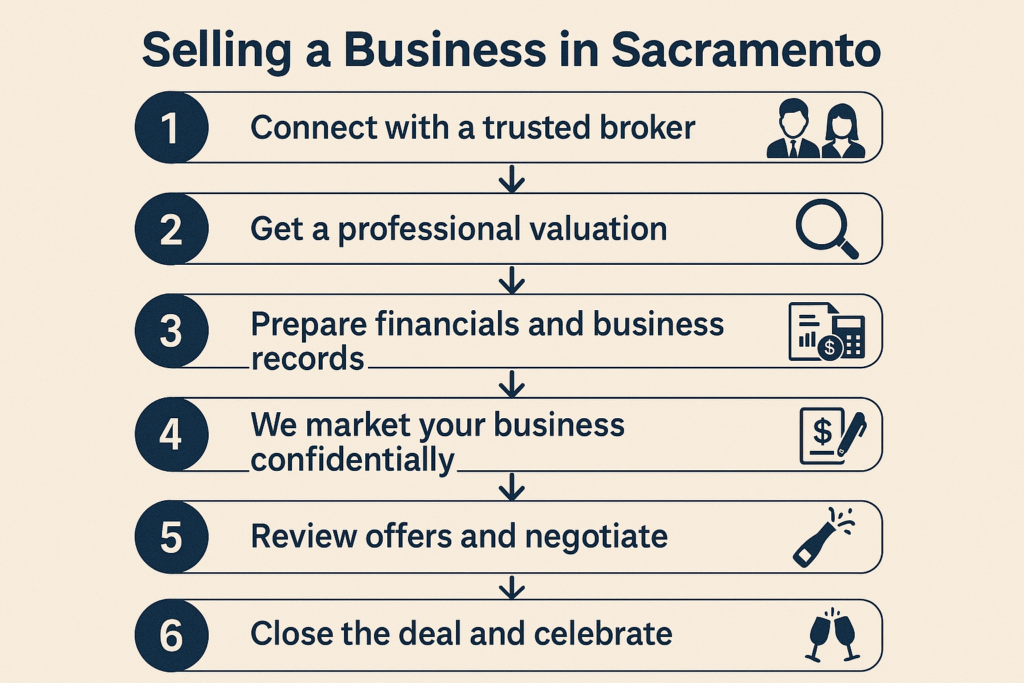
Selling a business in Sacramento in 2026 involves a clear process. Expect it to take about 5 to 7 months. This timeframe allows for proper valuation and buyer screening. It is a significant step for any owner.
| Metric | Typical Range |
| Timeframe | 5-7 months |
| Broker Commission | 8%-12% |
| Valuation Multiple (SDE) | 2.5x – 5x |
How to Sell My Business in Sacramento
Start by understanding your business’s true worth. This involves gathering detailed financial records. You need at least three years of Profit & Loss statements. Also include Balance Sheets and Cash Flow statements. Tax returns are equally important. This data forms the basis for valuation. Preparing these documents early saves time later. It shows buyers you are serious and organized. Selling a business in Sacramento requires this preparation.
Next, decide on your selling strategy. Will you use a broker or sell it yourself? For most, a broker is recommended. They handle marketing and negotiations. This protects your confidentiality. It also ensures you reach qualified buyers. The process of selling a company in Sacramento is complex.
Best Business Brokers in Sacramento

Choosing the right broker is crucial. Look for those with experience in your industry. Sacramento has many specialized brokers. Some focus on tech, others on restaurants. Ask about their track record. Check their client reviews. A good broker understands the local market. They can accurately assess your business for sale. This expertise is invaluable for a successful sale. Find brokers who are part of industry associations.
Firms like Sacramento Business Brokers and Sunbelt Business Brokers of Sacramento are well-regarded. M&A Business Advisors also serves the area. Transworld Business Advisors is another option. For a different approach, consider SellerForce. They offer a success-based fee model. This means no upfront costs for you. This can be a significant advantage. Researching these options is key.
Cost to Sell a Business in Sacramento
The main cost is the broker’s commission. This is a percentage of the final sale price. It typically ranges from 8% to 12%. This fee covers their marketing and expertise. Other costs include valuation fees. You might also pay for legal and accounting services. These are essential for a smooth transaction. The total cost depends on your business size. It also depends on the complexity of the sale. Budgeting for these expenses is important.
Expect other minor costs. These can include transfer fees for permits. Legal document preparation also adds up. These costs are an investment. They help ensure you get the best possible price. Understanding these expenses is part of selling a small business in Sacramento.
Business Valuation for Sale in Sacramento

A professional valuation is non-negotiable. It determines your business’s market value. The process often calculates Seller’s Discretionary Earnings (SDE). This is your business’s profit before owner’s salary and perks. A market-based multiple is then applied. This multiple is usually between 2.5x and 5x SDE. Factors like industry trends and business performance affect this multiple. An accurate valuation sets a realistic asking price. This avoids overpricing or underpricing your business.
This valuation is critical for attracting serious buyers. It provides a solid foundation for negotiations. Without it, you risk losing potential buyers. Or you might sell for much less than your business is worth. Proper valuation is key to selling my business Sacramento.
Sell a Small Business in Sacramento
Selling a small business requires careful planning. Focus on streamlining operations. Ensure your financials are impeccable. Buyers want to see consistent profitability. They also look for a clear growth path. Reducing owner dependency is also wise. This makes the business more attractive. It shows it can run without you. This is a key step for any small business owner.
Maintain strict confidentiality throughout the process. Leaks can harm employee morale. They can also alert competitors. A broker helps manage this. They use Non-Disclosure Agreements (NDAs). This protects your sensitive information. Selling a small business is a major undertaking.
Restaurant Business Brokers in Sacramento
The restaurant industry has unique needs. Restaurant business brokers understand this. They know the specific market factors. These include lease terms and equipment value. They also understand food costs and labor. A specialized broker can find buyers. These buyers often have restaurant experience. This leads to a smoother sale. Look for brokers with a proven history in this sector.
Restaurant Realty Broker – Jim Pate is one example. These brokers know how to market your establishment. They understand its true potential. This is vital for selling a restaurant. It ensures you connect with the right buyers. They help navigate the specific challenges.
Business Broker Fees in Sacramento
Broker fees are typically a commission. It is a percentage of the sale price. The average range is 8% to 12%. Some brokers, like SellerForce, use a success-based model. This means you pay only when the sale closes. This can reduce upfront financial risk. Always clarify the fee structure upfront. Understand what services are included. Fees are negotiable, especially for larger businesses.
These fees cover the broker’s work. This includes marketing, buyer screening, and negotiation. It is an investment in a successful sale. Compare different brokers’ fee structures carefully. This helps manage the cost to sell a business in Sacramento.
Average Time to Sell a Business in Sacramento
The average time to sell a business in Sacramento is 5 to 7 months. This timeframe can vary. It depends on market conditions. It also depends on your business’s appeal. A well-priced, well-documented business sells faster. Businesses in high-demand industries may sell quicker. Conversely, niche businesses might take longer. Patience is important during this process. Rushing can lead to a lower sale price.
Factors influencing the time include buyer readiness. Buyer financing can also cause delays. Proper preparation speeds up the process. It helps avoid common pitfalls. This is a key consideration for sellers. It impacts your future plans.
Your Business Sale: Expert Verdict for 2026
Selling your business in Sacramento in 2026 demands preparation. Focus on accurate valuation and professional help. A good broker is your best ally. They navigate the complexities efficiently. Understand all costs involved upfront. This includes broker fees and professional services. The average time to sell is 5-7 months. Be patient and stay organized.
Actionable Advice: Start organizing your financials today. Get a professional valuation early. Research and interview at least three business brokers. Prioritize confidentiality throughout. Visit Sacramento Business Brokers for local insights. Also, explore SellerForce’s approach to selling your business.
Your 3-Step Action Plan to Sell Your Business in Sacramento
Step 1: Get Your Financials in Order
Gather three years of profit and loss statements, balance sheets, cash flow statements, and tax returns. Organize them neatly in a digital folder for easy sharing.
Step 2: Hire a Local Broker with a Success-Fee Model
Interview brokers like SellerForce that charge only upon sale, saving you upfront costs. Ensure they specialize in your industry and have a proven track record in Sacramento.
Step 3: Prepare for a Confidential Sale
Work with your broker to create a blind profile that hides your identity from competitors and employees. Pre-qualify buyers before sharing sensitive details to protect your business.
What to Avoid
- Do not share financials without a signed NDA.
- Do not overprice your business based on emotion; rely on your broker’s valuation.
- Do not tell employees until the deal is nearly closed.
Frequently Asked Questions
How long does it take to sell a business in Sacramento?
Typically 5 to 7 months from listing to closing. This timeline can vary based on industry, asking price, and buyer financing.
What is Seller’s Discretionary Earnings (SDE) and why does it matter?
SDE measures the true financial benefit a business owner receives. Buyers use it to apply a multiple, usually between 2.5x and 5x, to determine your business’s market value.
Do I need to pay a broker upfront?
Not necessarily. Firms like SellerForce offer a success-based fee model, meaning you pay only when the sale closes. Always ask about fee structures before signing a contract.
Choosing a knowledgeable local broker is your strongest move toward a profitable sale. Their expertise in Sacramento’s market and regulations protects your interests.
Now take the first step: schedule consultations with three brokers from our list. Compare their approaches and select the one that feels right for your business.
Imagine walking away from the closing table with a check in hand and your future wide open. That clarity is achievable with the right preparation and partner.
