


You’ve been paying too much for your domain name, and you probably didn’t even know it. Most people think a website address is just a one-time purchase, but it’s actually a yearly lease that can cost you a lot more than it should.
The truth is, many registrars hide fees and make it hard to switch. But once you understand how domain registration works, you can save real money every year.
What Is a Domain Name and Why Should You Care?
A domain name is your address on the internet. It’s what people type into their browser to find your site, like ‘yourbusiness.com’. Without it, you’re invisible online.
The Domain Name System, or DNS, translates that name into a number (an IP address) that computers understand. Think of it like a phonebook for the web. When you register a domain, you’re leasing it for a year or more from a registrar like GoDaddy, Namecheap, or Squarespace (which now handles Google Domains).
The price varies a lot. A standard .com might cost $10 to $15 per year, but premium names or rare TLDs like .io can run $30 or more. Always check renewal rates, because some companies lure you in with a low first-year price and then jack it up.
Domains: Your Digital Address in 2026
A domain name is your unique web address. It makes websites easy to find online. Think of it like a street address for your digital home. This name connects to a complex system that finds the right computer. The market offers many choices for your website address. Prices are generally affordable for individuals and small businesses. We see a focus on security features now. New TLD options also give more choices. Early 2026 data shows stable pricing. Many registrars compete for your business. This makes it a good time to secure your online identity.
| Service | Average Cost (USD) | Notes |
| Domain Registration (.com) | $10 – $20 / year | Annual lease, price varies by registrar. |
| Premium Domains | $100s – $1000s | Highly sought-after names, one-time purchase. |
| DNS Management | Often Free | Included with most registrars. |
| SSL Certificate | $0 – $50 / year | Secures your domain, often bundled. |
Picking the Right TLD
Your TLD is the extension, like ‘.com’ or ‘.org’. ‘.com’ is most common and trusted. Other TLDs can show your location or purpose. For example, ‘.io’ is popular for tech. Choosing wisely helps people understand your site. It can also affect search engine visibility. Consider your audience and brand. A clear TLD builds trust. This choice impacts how users see your brand.
DNS: The Internet’s Phonebook
The DNS, or Domain Name System, is vital. It translates your domain name into an IP address. Computers use numbers, not words. DNS acts like a phonebook. It finds the correct server for your site. Without DNS, you could not reach websites easily. This system is fundamental to internet navigation. It ensures fast and reliable connections.
Registering Your Domain
Domain registration is how you claim your name. You lease it from a registrar. Companies like Namecheap and GoDaddy handle this. You search for an available name. Then, you pay an annual fee. Always check renewal costs. Some registrars offer discounts. This process secures your website address.
SLD vs. TLD Explained
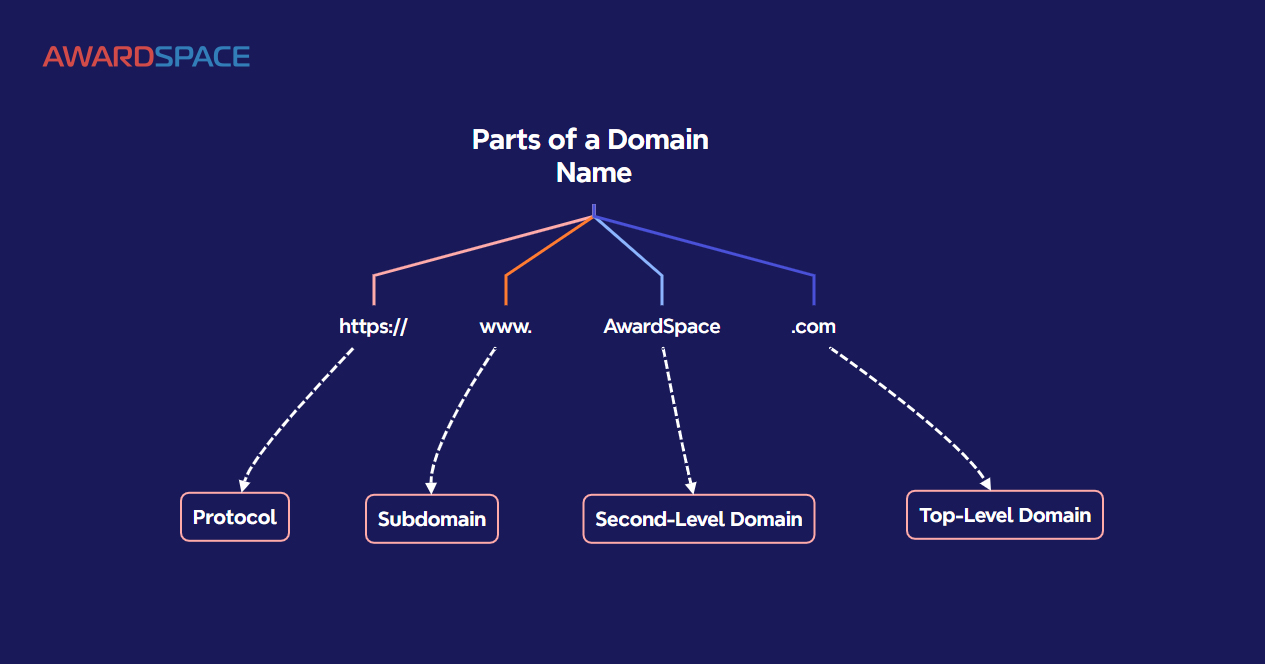
A domain name has parts. The SLD is the unique name you choose. For ‘google.com’, ‘google’ is the SLD. The TLD is the ending, like ‘.com’. The SLD makes your site distinct. The TLD categorizes it. Together, they form your full address. Understanding this helps in choosing a name.
Finding Available Names
A domain search helps you find names. Use registrar tools for this. Type in your ideas. They show available options. Look for names that are easy to remember. Shorter names are often better. Avoid hyphens and numbers if possible. A good name is key to your brand. This search is the first step.
Biological Domains
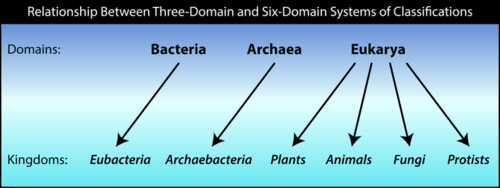
The word ‘domain’ also has a science meaning. In biology, it’s a top rank. It divides all life forms. The three main biological domains are Archaea, Bacteria, and Eukarya. Eukarya includes humans, plants, and fungi. This classification helps scientists organize life. It shows major evolutionary branches.
IT Security Domains
In IT security, domains segment networks. This improves vulnerability management. Different IT security domains exist. Examples include User, Workstation, and LAN. Each domain has specific security needs. Segmenting helps protect sensitive data. It limits the impact of breaches. This is crucial for business security.
Web Hosting vs. Domain Registration
Web hosting and domain registration are different. Registration is your address. Hosting is the land where your website lives. You need both for a website. Hosting stores your website files. Your domain name points to these files. Many services offer both. But they are separate functions. Get your domain name first.
The Future of Domains
The domain name market will keep growing. Expect more focus on security. New TLDs will offer more choices. Prices should remain competitive. For your website, choose a memorable name. Use a reliable registrar. Consider Squarespace’s acquisition of Google Domains. This shows the market is consolidating. Secure your website address today. It is a foundational step for your online presence.
Your Domain Action Plan
Step 1: Choose a Memorable Name
Pick a short, brandable name that reflects your purpose. Avoid numbers and hyphens—they confuse people and look unprofessional.
Step 2: Select a Reliable Registrar
Compare prices and features at GoDaddy, Namecheap, or Cloudflare. Look for free WHOIS privacy and easy DNS management.
Step 3: Secure Your Domain and Set Up DNS
Register your domain for at least one year to lock in the price. Then point your DNS records to your hosting provider to get your site live.
Common Mistake: Using a domain that is too long or hard to spell. Keep it under 15 characters and test it out loud.
Frequently Asked Questions
Can I buy a domain name permanently?
No, domain names are leased, not owned. You pay annually to keep the rights, and you can renew indefinitely.
What happens if I forget to renew my domain?
You usually have a grace period of 30 days to renew without extra fees. After that, the domain may be auctioned off to someone else.
Do I need a .com extension?
Not necessarily, but .com is the most recognized and trusted TLD. If your preferred .com is taken, consider .io, .co, or .net as alternatives.
Choosing the right domain name is your first step to building a credible online presence. With a clear action plan, you can secure a name that works for years to come.
Now, take the next step: explore available domains on your favorite registrar’s site. Your perfect domain is waiting—grab it before someone else does.
Imagine your domain becoming the address your customers remember and trust. That small decision can open doors to a digital future full of possibility.
