

Did you know that a single spark in your paint booth could cost you your business? Most shop owners think a fire extinguisher is enough, but that is a dangerous myth. A proper fire suppression system is not optional; it is a legal requirement for safety and insurance.
Without NFPA 33 compliance, you risk fines, lawsuits, and total loss of your workshop. The good news? Modern systems are affordable and easy to install with a licensed professional. Let us break down what you actually need to protect your people and your investment.
Why Your Paint Booth Needs a Fire Suppression System That Meets NFPA 33 Standards
In 2026, fire codes for spray booths are stricter than ever. NFPA 33 requires automatic detection and suppression for any operation using flammable paints or solvents over one liter per shift. That means almost every auto body shop and industrial paint line must have a certified system installed.
Pre-engineered kits from brands like Kidde Fire Systems or Ansul start around $780 for basic dry chemical units. For larger custom setups, expect to pay $8,000 to $20,000 including design and permits. Either way, a licensed fire professional must do the final installation and tagging to pass inspection.
Paint Booth Fire Suppression: Your Essential Safety Shield
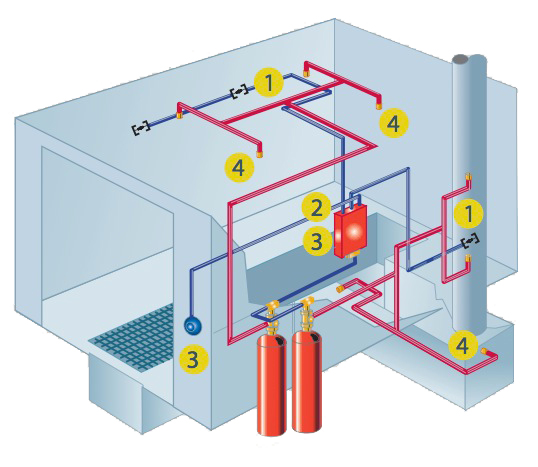
In 2026, ensuring your paint booth is equipped with a robust fire suppression system is not just good practice; it’s a critical requirement. These automated systems are designed to detect and extinguish fires before they can cause catastrophic damage or harm personnel. They are built to handle fires from flammable paints, solvents, and vapors common in spray operations.
Compliance with standards like NFPA 33 is mandatory for most spray applications. This national standard ensures your operations meet rigorous safety benchmarks. Understanding the core functions, from rapid fire detection to agent discharge and safety protocols, is key to protecting your investment and your team.
| Feature | Details |
|---|---|
| Standard | NFPA 33 |
| Exemptions | Low-volume use (under 1 liter/8 hours) |
| Detection | Heat sensors, fusible links, flame detectors |
| Agents | Dry chemical, CO2, foam |
| Integration | Ventilation shutdown, equipment shutdown |
| Manual Control | Manual pull stations |
| Cost (Kits) | $780 – $2,200 |
| Cost (Custom) | $8,000 – $20,000+ |
| Installation | Licensed fire professional required |
NFPA 33 Compliance for Paint Booths
NFPA 33 is the cornerstone for safe spray application operations. It outlines the requirements for protecting areas where flammable or combustible materials are used. Adhering to this standard ensures your paint booth fire protection meets federal and local safety mandates. This standard covers everything from the booth’s design to the specific fire suppression systems needed.
Most facilities must comply unless they use very small amounts of materials. The standard aims to prevent fires and explosions common in environments with volatile substances. Working with a qualified professional ensures your setup meets all NFPA 33 specifications, providing essential paint booth safety.
Dry Chemical vs. Gaseous Suppression Agents
When selecting a suppression agent, you have key choices. Dry chemical agents are versatile, effective against Class A, B, and C fires. They are a common and reliable choice for many paint booth applications. These systems are often found in pre-engineered kits.
Gaseous agents, like CO2 or clean agents, are used when residue-free cleanup is critical. They work by displacing oxygen, effectively smothering the fire. While effective, they may require specialized systems and are often chosen for sensitive or high-value equipment where dry chemical residue would be problematic.
Dry chemical systems are generally more cost-effective for standard paint booth fire protection. Gaseous agents are reserved for specific applications demanding clean discharge.
Ventilation Shutdown in Fire Events
A crucial safety feature in modern paint booth fire suppression is the automatic shutdown of ventilation fans. During a fire, ventilation can feed oxygen to the flames, accelerating spread. By automatically stopping the fans, the system helps contain the fire and smoke within the booth.
This integrated safety protocol is designed to work in conjunction with the suppression agent discharge. It prevents the fire from spreading through the ventilation system to other parts of the facility. This action is a vital part of the overall strategy for industrial fire suppression.
Fire Detection Systems for Spray Booths
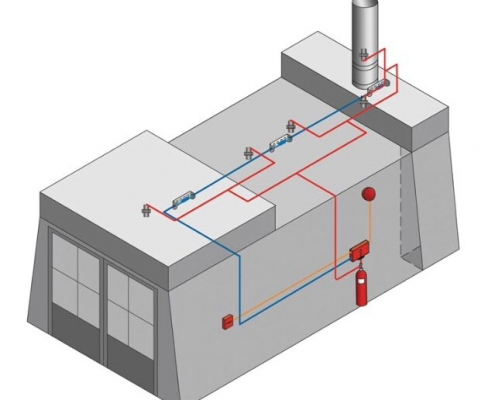
Effective fire detection is the first line of defense. Paint booth fire safety relies on systems that can quickly identify a fire’s start. Common detection methods include heat sensors that activate at a specific temperature. Fusible links are also used; they are designed to melt and trigger the system at precise heat levels.
More advanced systems may incorporate multi-spectrum flame detectors. These can identify the specific signature of a fire. Early detection ensures the suppression system activates rapidly, minimizing damage and risk. This is a core component of robust spray booth fire protection.
Pre-Engineered Fire Suppression Kits
For many standard paint booth models, pre-engineered fire suppression kits offer a practical solution. Brands like Kidde and Ansul provide kits designed for specific booth sizes and configurations. These kits typically include the detection devices, agent cylinders, and discharge nozzles.
Using a pre-engineered kit can simplify the installation process and ensure compatibility with your booth. They are often more affordable than fully custom systems. However, it is crucial that these kits are installed and certified by a licensed fire professional to meet compliance requirements.
Frequent Error: Assuming a pre-engineered kit is a ‘plug-and-play’ solution without professional installation and tagging.
Cost of Paint Booth Fire Suppression
The cost of a fire suppression system for your paint booth can vary significantly. Simple, pre-engineered dry chemical kits for smaller automotive paint booths can range from about $780 to $2,200. This price often includes the main components but may not cover professional installation.
For larger, custom industrial setups, the costs increase dramatically. A comprehensive installation, including design, specialized equipment, and municipal approvals, can easily exceed $8,000 to $20,000. These larger systems require detailed engineering and professional oversight.
Custom Industrial Fire Suppression Design
When standard solutions do not fit, custom industrial fire suppression design is necessary. This approach is for complex operations or large facilities with unique layouts and risks. A specialized fire protection engineer will assess your specific needs and design a tailored system.
This involves detailed plans, agent selection based on hazards, and integration with existing facility safety protocols. Custom design ensures maximum protection for high-risk environments. It is a significant investment but essential for comprehensive safety in demanding applications.
Manual Pull Stations and Control Panels
While automated systems are primary, manual intervention is vital. Manual pull stations provide a direct way for personnel to activate the fire suppression system in an emergency. These are typically located near exits and clearly marked.
The control panel serves as the brain of the system. It monitors all components, displays system status, and logs events. It also manages the sequence of operations, such as shutting down ventilation and releasing the suppression agent. Both components are essential for effective paint booth ventilation shutdown and overall fire safety.
The Future of Paint Booth Fire Safety in 2026
In 2026, the emphasis on proactive fire safety for paint booths continues to grow. We are seeing increased integration of smart detection technologies and more sophisticated monitoring capabilities. The goal is always faster detection and more precise suppression.
Expect continued development in clean agent technologies for sensitive environments. Regulatory bodies will likely maintain strict enforcement of NFPA standards. Investing in a properly designed, installed, and maintained system is not an option; it is a fundamental necessity for any serious spray operation.
Your 3-Step Action Plan for a Safer Paint Booth
Step 1: Assess Your Risk and Compliance
Check if your operation falls under NFPA 33 requirements. Most spray booths using flammable materials need a listed suppression system unless you use less than 1 liter per 8-hour shift.
Step 2: Choose Your Suppression Agent
For general paint booths, dry chemical systems (like Ansul or Kidde) are cost-effective and reliable. If you need zero residue for sensitive equipment, opt for CO2 or clean agent systems.
Step 3: Hire a Licensed Professional for Installation
Only a certified fire protection contractor can design, install, and tag your system to meet local codes. Expect costs between $780 for simple kits and $20,000+ for custom industrial setups.
Frequently Asked Questions
Do I really need a fire suppression system for a small paint booth?
Yes, if you use any flammable paint or solvent and exceed 1 liter per 8-hour period, NFPA 33 requires it. Even small booths pose significant fire risks from vapors and overspray.
How often does the system need maintenance?
Inspect your system monthly for physical damage and proper pressure. Have a licensed technician perform a full annual check and recharge the agent after any discharge.
Can I install the system myself to save money?
No, only a licensed fire protection professional can legally install and certify the system. Improper installation voids warranties and can lead to insurance denial after a fire.
Choosing a compliant fire suppression system is not just about passing inspection—it’s about protecting your people and your business from catastrophic loss. With NFPA 33 as your guide and a professional installer, you can operate with confidence.
Now that you understand the core components and costs, your next step is to request quotes from at least two certified contractors in your area. Compare their proposed designs and ensure they include all required detection and shutdown features.
Imagine a paint booth that not only meets code but also gives you peace of mind every time you spray. That’s the future of safe, efficient finishing—where safety and productivity go hand in hand.
