


You have a great app idea, but you don’t know how to code. Hiring a developer feels scary and expensive. The truth is, many people overpay or get burned by bad hires, but it doesn’t have to be that way.
This guide shows you exactly how to hire a developer for an app in 2026 without getting ripped off. You will learn the real costs, where to find good talent, and how to protect your idea. Let’s get started.
Understanding the 2026 App Development Landscape
Hiring a developer for an app today means choosing between freelancers, agencies, or no-code experts. Freelancers on platforms like Upwork and Freelancer.com offer flexibility and lower rates, but you must vet them carefully. Agencies provide full project management and reliability, but cost more.
In 2026, hourly rates vary widely by region. North American senior developers charge $110 to $200+ per hour, while Eastern European seniors range from $50 to $100. Asian developers, especially in India and the Philippines, can be as low as $30 to $60 per hour for senior talent. For a simple MVP, a freelancer might cost $5,000 to $15,000, while an agency could charge $30,000 or more.
No-code app builders like Bubble are also a popular choice for non-technical founders. Hiring a certified no-code expert can reduce costs and speed up development. However, complex apps may still require traditional coding. Your choice should match your budget, timeline, and app’s technical needs.
App Development in 2026: Your Smart Hiring Guide
Hiring a developer for an app in 2026 demands smart choices. You must balance cost, quality, and what your app needs to do. This guide helps you navigate these decisions.
| Developer Type | Region | Hourly Rate (2026 Est.) | Notes |
| Junior | North America | $60 – $110 | For simpler tasks or as a support role. |
| Senior | North America | $110 – $200+ | For complex features and architecture. |
| Junior | Western Europe | $50 – $90 | Good balance of skill and cost. |
| Senior | Western Europe | $90 – $160 | Experienced professionals for demanding projects. |
| Junior | Eastern Europe | $30 – $50 | Cost-effective talent for many projects. |
| Senior | Eastern Europe | $50 – $100 | Strong technical skills at a good price. |
| Junior | Asia (India, Philippines) | $15 – $30 | Budget-friendly for startups and MVPs. |
| Senior | Asia (India, Philippines) | $30 – $60 | Affordable expertise for larger projects. |
Get the Right Talent
You need to hire a mobile app developer who fits your project. Think about freelancers for flexibility. Agencies offer full project management. Upwork and Freelancer.com have many options. Vetting is key to find good talent there.
For top-tier developers with high assurance, look at Toptal or Proxify. They cost more but offer proven skills. Specialized agencies like Zazz provide complete solutions. They manage the whole process for you.
Read also: Hire OpenStack Developers at $34.50/hr – See How in 2026
Understand App Development Costs
App development cost 2026 varies greatly. Rates depend on location and experience. North America is the most expensive. Asia offers the lowest rates. These prices change based on demand and technology.
Choosing a developer location impacts your budget significantly. Eastern Europe provides a strong middle ground. It offers good value for your money. This helps manage your overall app development cost.
Find a Freelance App Developer
To find a freelance app developer, use online platforms. These sites connect you with many professionals. Look for developers with experience similar to your app idea. Clear communication is vital with freelancers.
Freelance app developer rates are often lower than agencies. This can save money, especially for smaller projects. Ensure you have a clear contract for all work. This protects both you and the developer.
Read also: Where to Hire a Salesforce Specialist in 2026? Stop Wasting Money on Bad Hires
Vetting Developers for Your Project

Vetting developers is crucial for success. Review their past work carefully. Check portfolios for relevant experience. Ask for references from previous clients. This helps confirm their skills and reliability.
Many platforms offer tools to help with vetting. Use technical assessments to test their coding ability. This step prevents costly mistakes later. It ensures you hire a qualified app developer.
iOS vs Android Developer Hire
Deciding between iOS and Android developer hire depends on your target audience. iOS users often spend more on apps. Android has a larger global market share. Consider which platform reaches your ideal customers best.
Native development offers the best performance for each platform. This means hiring separate iOS and Android specialists. It can increase your app development cost. But it ensures a premium user experience.
Cross-Platform App Development Options
Cross-platform app development lets you build for both iOS and Android. Use frameworks like React Native or Flutter. This approach can be faster and cheaper. It reduces the need for separate developer teams.
A cross-platform app developer can build one codebase. This code works on both operating systems. It’s a great option for budget-conscious projects. However, native apps might offer better performance.
Minimum Viable Product Development
Start with a Minimum Viable Product (MVP). This means building only the core features. It helps you launch faster and cheaper. You can test your app idea with real users. This feedback guides future development.
Minimum viable product development is smart. It reduces initial investment. You learn what users truly want. Then you can add more features based on that data. This iterative approach is very effective.
App Developer Contract Essentials
A solid app developer contract is a must. It protects your intellectual property. Clearly define project scope and deliverables. Specify payment schedules and milestones. This prevents misunderstandings and disputes.
Always include a Non-Disclosure Agreement (NDA). This keeps your app idea confidential. A clear contract ensures everyone is on the same page. It sets expectations for the app development process.
The Future is Flexible
In 2026, hiring an app developer is more accessible. The rise of no-code experts is notable. Professionals certified in platforms like Bubble can build apps quickly. This is ideal for simpler applications or prototypes.
Hands-on advice: Always start with a clear plan. Define your MVP features precisely. Get a Figma prototype before hiring. This saves time and money. Thorough vetting and a strong contract are non-negotiable. This ensures a successful app launch.
Read also: Hire ASP Developers Without the Headache: 2026 Rates
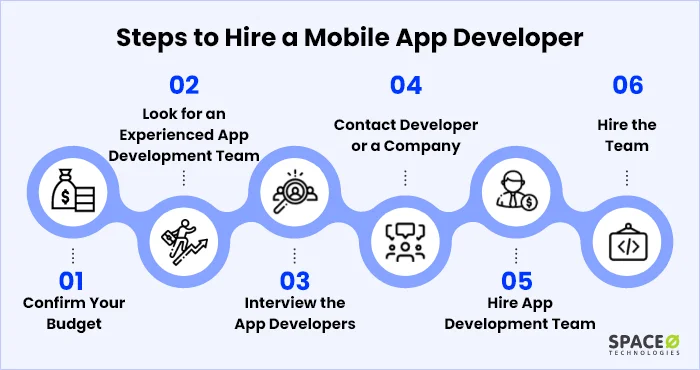
Your 3-Step Action Plan to Hire the Right Developer
Step 1: Lock Down Your Scope
Write down exactly what your app must do to launch. Focus on one core feature that solves your user’s biggest problem.
Everything else is a distraction. A tight scope saves you thousands of dollars and months of rework.
Step 2: Choose Your Hiring Path
If you have a tight budget and can vet talent yourself, go with a freelancer on Upwork. For a hands-off experience with quality assurance, pick a vetted network like Toptal.
Need a full team that handles design, development, and project management? Hire a specialized agency like Zazz.
Step 3: Protect Your Idea and Money
Always sign an NDA and a fixed-price contract with clear milestones. Pay in increments tied to deliverables, never a lump sum upfront.
This keeps both sides accountable and gives you an exit if things go south.
Frequently Asked Questions
How do I know if a developer is good?
Review their portfolio for apps similar to yours and ask for client references. Conduct a short technical test using a platform like Codility to verify their skills.
Should I hire locally or offshore?
Local developers offer easier communication and time zone alignment but cost more. Offshore developers from Eastern Europe or Asia provide significant savings if you manage the project closely.
What if I need changes after development starts?
Expect changes—they’re normal. Build a buffer of 20% extra budget for revisions and use an agile process with weekly check-ins to adapt quickly.
You now have a clear framework to hire a developer with confidence. This structured approach saves you from costly mistakes and gets your app to market faster.
Next, create a simple wireframe using Figma or even pen and paper. Then start reaching out to candidates with your scope in hand.
Picture your app live on someone’s home screen, solving a real problem every day. That future is one smart hire away.
